Maintenance Management (CMMS)
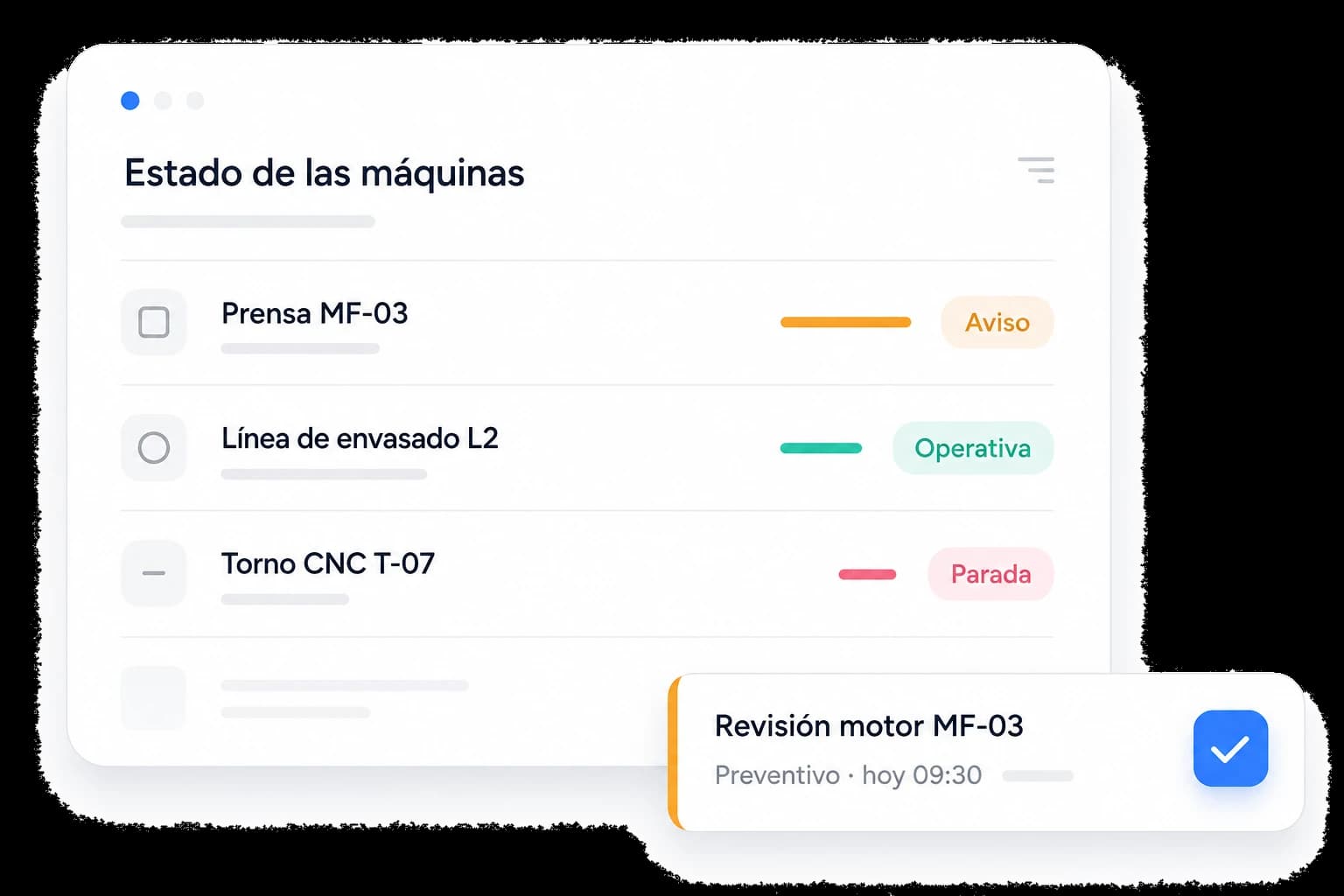
Machines are a fundamental part of our processes, so we need to keep them in top condition at all times and understand what issues they have.
Plan Your Team
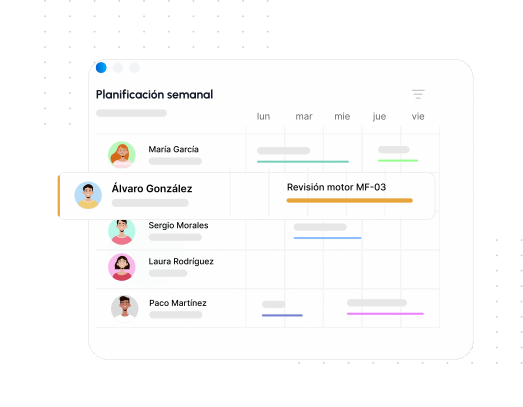
Whether you're managing an in-house maintenance team or an external one (facilities or on-site interventions), Bold lets you plan the week at a glance to make sure you cover everything.
If you'd rather not spend time on this, you can let Bold optimise your team's schedule automatically with a single click.
Log What Happened
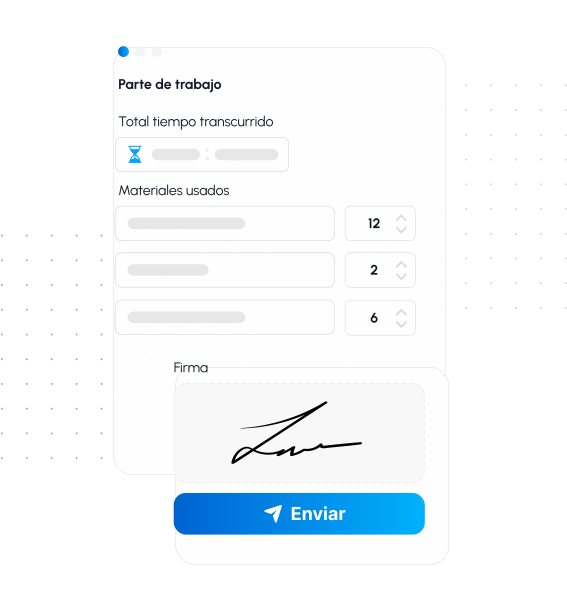
For both corrective and preventive maintenance, it is important to record the cause of the failure as well as the time and materials spent resolving it.
You can categorise incidents at multiple levels — as many as you need — so they map perfectly to your processes and machines.
Dig Deep, Understand More
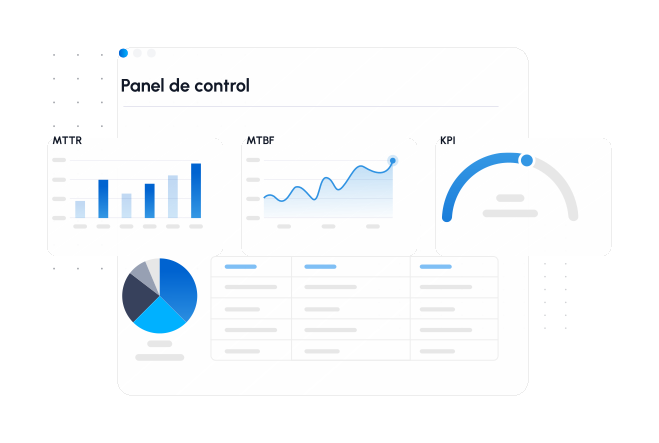
With Bold you get indicators such as Mean Time Between Failures (MTBF) and Mean Time To Repair (MTTR).
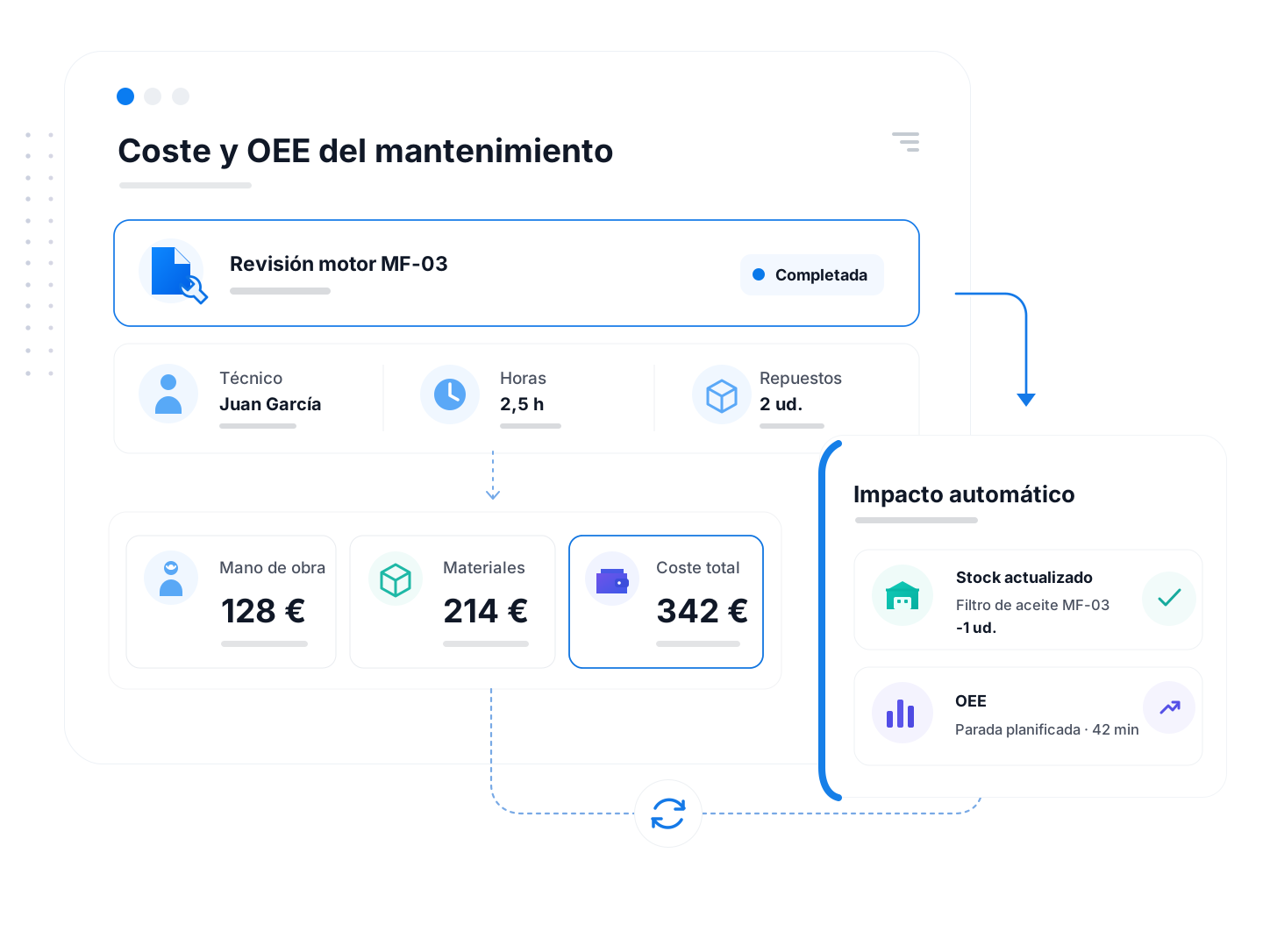
But that's just the start — you can analyse the data to understand the most frequent root causes and detect underlying problems so you can solve them once and for all.
Frequently asked questions
What is a CMMS (Computerized Maintenance Management System)?
A CMMS (Computerized Maintenance Management System) is software that centralizes all maintenance management for a business: preventive plans, breakdown work orders, interventions, spare parts consumed, and reliability KPIs. Its goal is to keep your machines and facilities in top condition at the lowest possible cost — preventing unexpected downtime and giving you visibility into what is happening with each asset over time.
What types of maintenance does a CMMS manage?
A CMMS manages the three main types of maintenance: corrective (repairing what breaks down), preventive (scheduled interventions to avoid failures), and predictive (based on sensors or indicators that anticipate problems). It also covers legal or regulatory maintenance (mandatory inspections) and, in many cases, condition-based maintenance. Having all these types in a single tool is what enables you to optimize the workload of the maintenance team and reduce the overall cost.
How does preventive maintenance work with a CMMS?
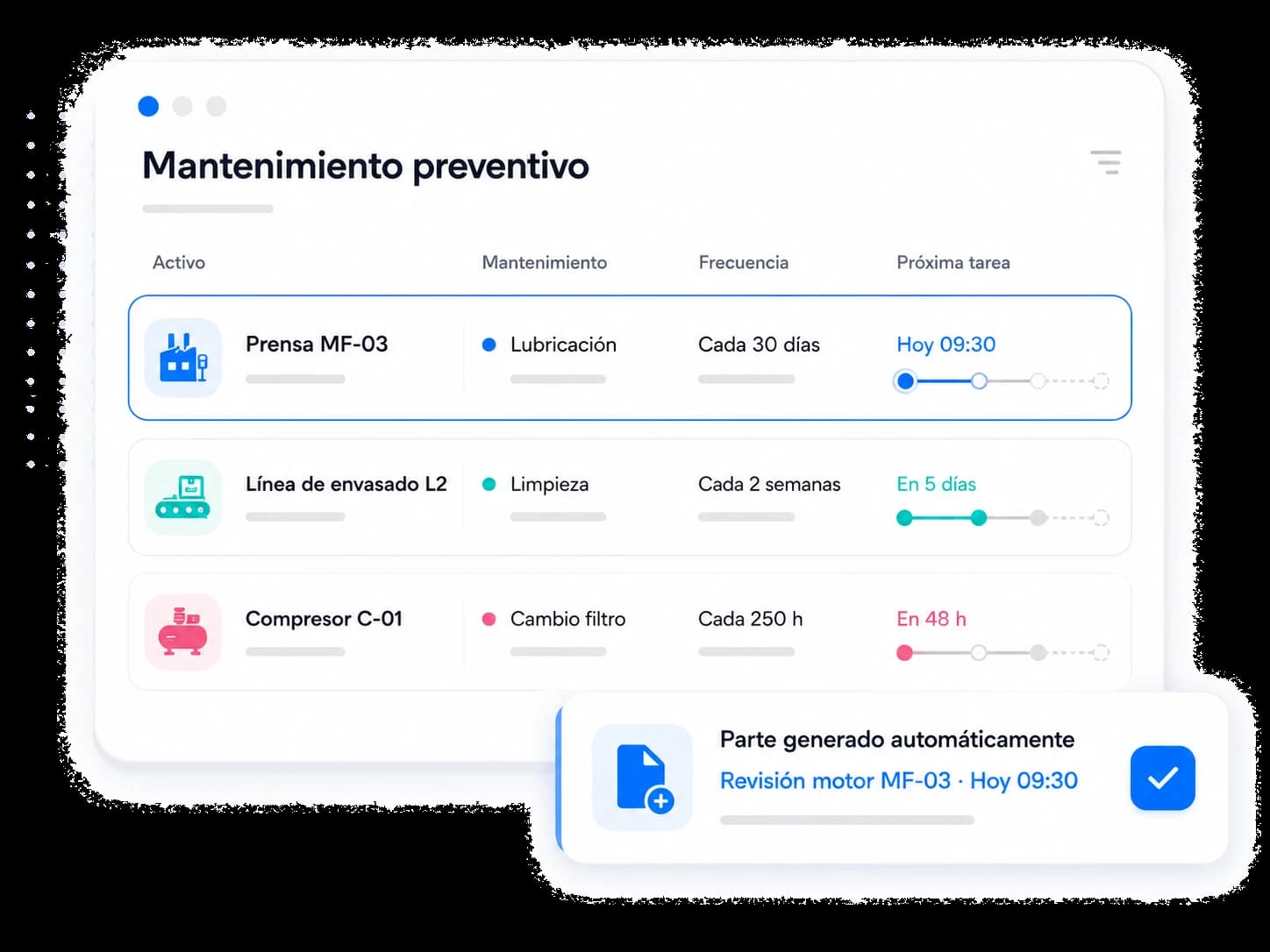
Preventive maintenance is configured by defining plans per asset: what tasks need to be performed, how often (days, operating hours, cycles), and who carries them out. The CMMS automatically generates work orders when they are due, assigns them to the appropriate technician, and stores the record when they are closed. This turns preventive maintenance into a systematic process — not something that happens only when someone remembers.
What maintenance KPIs does a CMMS measure?
The classic CMMS KPIs are MTBF (Mean Time Between Failures — a measure of reliability), MTTR (Mean Time To Repair — a measure of responsiveness), and equipment availability. Bold also gives you a breakdown by machine, by failure cause, and by shift, so you can identify the most problematic assets and most frequent root causes — and address the underlying issues rather than continuously firefighting.
What is the difference between a CMMS and an ERP?
The ERP manages cross-functional business information (purchasing, sales, finance, HR), while the CMMS specializes in maintenance: plans, work orders, breakdown history, spare parts consumed, and reliability KPIs. They are complementary systems: the CMMS feeds the ERP with spare-parts consumption and logged labor hours, and receives from the ERP the materials catalog and supplier information. Integration between the two eliminates double entry and discrepancies.
Why is a CMMS integrated with MES and WMS beneficial?
A CMMS integrated with the MES (shop-floor execution) knows in real time when a machine is stopped due to a breakdown and logs the incident without paperwork. Integrated with the WMS (warehouse), it draws spare parts directly from actual stock and triggers replenishments when needed. Instead of three separate systems with contradictory data, you have a single source of truth about what is happening on the shop floor. Bold delivers this integration out of the box.
What types of companies need a CMMS?
Any company with machines, facilities, or fleets requiring periodic maintenance: factories with production lines, workshops with their own machinery, maintenance companies that service clients, hotels, hospitals, or any business with critical assets. If breakdowns keep recurring, if you cannot remember when a piece of equipment was last serviced, or if breakdown work orders get lost in Excel spreadsheets, a CMMS will bring order and extend the useful life of your assets.
How is the maintenance team's workload planned with a CMMS?
With a CMMS you can see at a glance the team's weekly workload: which preventive interventions are due, which corrective work orders are open, and who can handle each one based on availability and specialization. In Bold you can assign manually or let the system propose the optimal schedule with a single click, balancing workload and priorities. It works equally well for in-house plant teams and external teams carrying out interventions at client sites.
How much does a CMMS cost and how long does implementation take?
With a cloud CMMS like Bold, implementation is phased: within days you can be logging breakdown work orders and preventive plans for your critical assets, then expand to the rest of the plant at your team's pace — without interrupting operations. On the cost side, you avoid upfront investment: it is billed as a monthly SaaS subscription from €300/month (Lite plan), including license, support, and updates.